PUBLISHED ON - 26 Nov' 2026
Best House Colour Combinations for Exterior and Interior
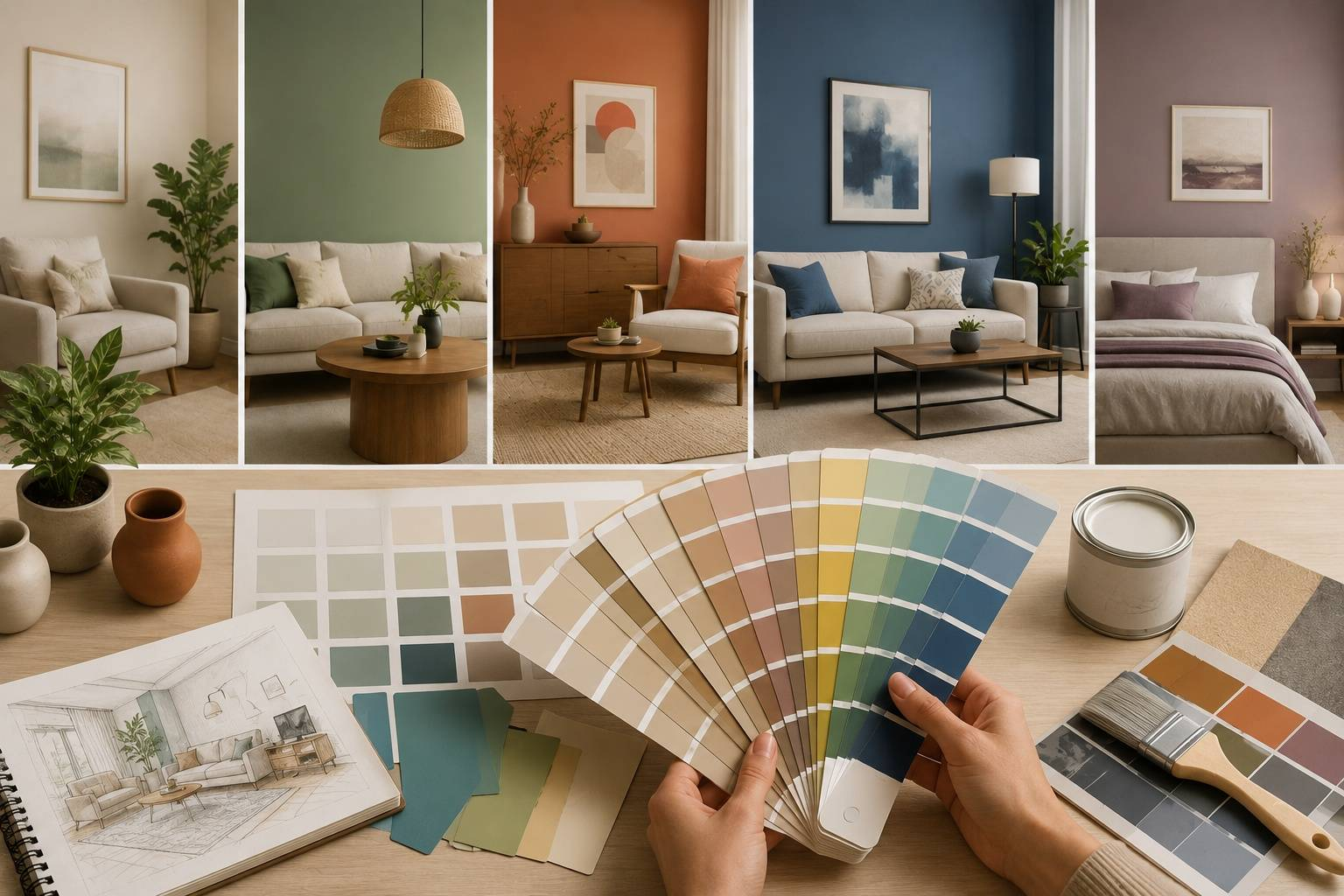
The best house colour combination for most Indian homes is a light base with a darker trim. Off-white with warm grey, cream with terracotta, and beige with dark brown all work well. Light shades keep the house cooler and hide dust better than pure white.
Inside, the rule is simple. Keep big walls soft and calm. Add stronger colour in small doses, like one accent wall, cushions or a door.
Colour also depends on where you live. Jaipur is hot and dusty. A shade that looks fresh in a catalogue can fade or look dirty within a year. This guide covers what works outside, what works in each room, and how to pick the right shade.
Best house colour combinations at a glance
Here are the combinations that work well in Indian homes. The last column matters more than people think. Some colours show dust and rain marks much faster than others.
| Combination | Best for | Look and feel | How well it hides dust |
|---|---|---|---|
| Off-white + warm grey | Exterior, living room | Clean and modern | Good |
| Cream + terracotta | Exterior, verandah | Warm, Rajasthani | Very good |
| Beige + dark brown | Exterior with wooden windows | Classic and earthy | Very good |
| Light grey + charcoal | Modern exterior, study | Sharp and minimal | Good |
| Sage green + off-white | Bedroom, balcony | Calm and fresh | Fair |
| Soft blue + white | Bedroom, bathroom | Cool and light | Fair |
| Ochre + white trim | Exterior, accent wall | Bright and local | Good |
| Greige + walnut wood | Living room, dining | Warm and settled | Good |
What are the best exterior house colours for Indian weather?
Light to mid shades work best outside. Dark colours soak up heat, so the walls and rooms behind them get hotter. Pure white reflects heat well, but it shows dust, rain streaks and algae quickly.
The safest exterior house colours are off-white, cream, beige, light grey or soft sandstone. These stay cooler and still look clean after a dusty summer. Light colours are also a cheap, simple way to cut heat in a home.
Your trim colour is the second half of the combination. Trim means window frames, railings, doors and borders. A darker trim gives the house shape and hides the marks that build up on edges.
Exterior colour combinations that work
These pairings suit most Indian houses and apartment fronts:
- Off-white walls with warm grey trim for a clean, modern front
- Cream walls with terracotta borders for a Rajasthani touch
- Beige walls with dark brown trim when you have wooden windows
- Light grey walls with charcoal grills and railings
- White walls with natural stone or wood cladding on one part
- Soft ochre walls with white window frames
Look at what won’t change before you pick a colour. The roof, the stone, the tiles and the boundary wall are all fixed. Your paint should suit them, not fight them.
Which home paint colour works best for each room?
Good home colour design starts with what each room is for. A bedroom should feel calm. A kitchen should feel clean and bright. A living room should feel warm for guests.
Here is a simple room-by-room guide for home colour design:
- Living room: beige, greige or warm white, with one accent wall in olive, rust or deep blue
- Bedroom: sage green, soft blue, dusty pink or warm grey
- Kitchen: white, light yellow or pale green in a washable finish
- Kids’ room: soft yellow or mint, with one bright accent colour
- Puja room: white, cream or light yellow
- Bathroom: light shades in moisture-resistant paint
- Study: muted blue or green to help with focus
The finish matters as much as the shade. Matte paint hides small wall marks and suits living rooms and bedrooms. Washable or satin finish is better for kitchens and kids’ rooms, since it wipes clean. Gloss works on doors, grills and window frames.
How to choose the best colour for your house
There is no single best colour for house walls. The right shade depends on light, room size and how you use the space. Start with light. North-facing rooms get softer, cooler daylight, so warm shades help them feel cosy. South-facing rooms get strong sun, so cooler shades keep them calm.
Room size comes next. Light colours make small rooms look bigger. Dark colours make large rooms feel closer and warmer. Low ceilings look higher when painted a shade lighter than the walls.
Designers often use the 60-30-10 rule. The main colour covers about 60 percent of the room. A second colour covers 30 percent through furniture or curtains. An accent covers the last 10 percent. It’s a simple way to keep a room balanced.
Always test before you buy. Paint a 2 x 2 ft patch on two different walls. Look at it in the morning, in the afternoon and under your evening lights. A shade can look very different at 7 pm than it did in the shop.
Many families also check Vastu before painting. Vastu advice usually leans toward light, earthy shades, which suits the Indian climate anyway. If it matters to your family, speak to a Vastu consultant before you finalise colours.
If you are buying a new home, ask the builder which paint brand and finish they use. Our guide to navigating the homebuying process explains what else to check before you book.
What Jaipur homes teach about colour
Jaipur has used colour well for a long time. The old city was painted pink in 1876 to welcome the Prince of Wales. That terracotta pink still defines the walled city today.
The lesson is to work with the setting, not against it. Warm sandstone, ochre and terracotta suit the light and the dust here. Grey and white work too, when stone or wood adds warmth.
Newer homes use natural materials to do some of the work that paint used to do. Sawai by Akshat at Statue Circle uses Bijoliya stone façades with handcrafted jharokhas. The stone gives the building its colour, so it never needs repainting and ages slowly.
Want to see how different colour and material choices look on finished homes? Browse the Akshat project gallery. For a look at the areas where these homes stand, read about Jaipur’s posh neighbourhoods.
Common colour mistakes to avoid
Most paint regrets come from a few simple mistakes. Each one is easy to avoid with a little planning.
- Choosing from a small shade card instead of a large test patch
- Using pure white outside in a dusty area
- Painting every room a different strong colour
- Ignoring fixed items like floors, tiles and woodwork
- Using matte paint in the kitchen, where it stains
- Skipping primer, which makes paint peel sooner
Your floor matters here too. Paint should suit the marble, tiles or wood below it. Our guide to marble vs tiles vs wooden flooring can help you plan both together.
Frequently Asked Questions
What is the best house colour combination for the exterior?
Off-white with warm grey, cream with terracotta, and beige with dark brown are safe choices. These light bases keep the house cooler. The darker trim hides dust and gives the front some shape.
Which colour is best for a house in hot weather?
Light shades like off-white, cream, beige and light grey work best. They reflect sunlight, so walls stay cooler. Avoid dark exterior colours, which absorb heat and fade faster.
What is the best home paint colour for a living room?
Warm neutrals like beige, greige or warm white suit most living rooms. They go with most furniture. Add one accent wall in olive, rust or deep blue for character.
Which colour is best for a bedroom?
Calm shades like sage green, soft blue, warm grey and dusty pink work well. They make the room feel restful. Avoid very bright reds and oranges on large bedroom walls.
Is white a good colour for the outside of a house?
White keeps a house cool, but it shows dust, rain streaks and algae quickly. In dusty cities, off-white or cream is easier to keep looking clean. Anti-dust exterior paint also helps.
How do I choose a home colour design that looks good together?
Use the 60-30-10 rule. Pick one main colour for 60 percent of the room. Use a second colour for 30 percent and an accent for 10 percent.
How often should a house be repainted?
Exterior walls usually need repainting every 5 to 7 years. Interior walls last about 4 to 6 years. Kitchens and kids’ rooms may need it sooner.
Which paint finish should I use in each room?
Use matte in living rooms and bedrooms. Use washable or satin paint in kitchens, bathrooms and kids’ rooms. Use gloss on doors, grills and window frames.
featured insights
 insight
