PUBLISHED ON - 19 Aug' 2026
How Architecture Influences Well-Being More Than We Realize
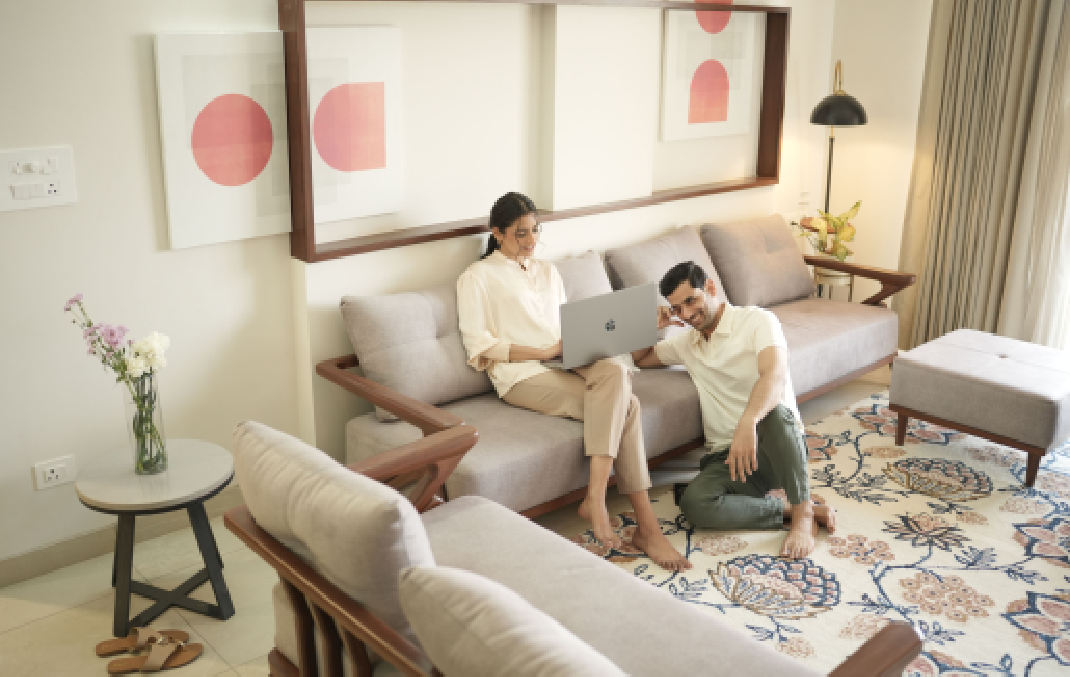
A home announces itself within seconds of entering it. Most people can’t say exactly what convinced them, only that something in the room agreed with them, or didn’t. The instinct is older than architecture itself, and usually correct.
Real estate rarely asks about it. Square footage, floor number, finish quality – that’s the checklist buyers are handed. Whether a room understands how the human body actually responds to it never comes up, even though it shapes the experience of living there every single day.
The air in the room
Air is the clearest example. A stuffy room slows thinking down long before it feels uncomfortable. Decisions take longer, focus frays faster, and none of it announces itself as fatigue until later in the day.
Offices with real airflow, not merely cooled air, consistently produce sharper decision-making from the same people doing the same work. Air movement matters as much as temperature, and most buildings are designed for the latter alone.
An answer from old Jaipur
This was understood in Rajasthan long before it became a subject for study. The jharokha, the carved latticed windows found across old havelis and palaces, did more than let royal women watch the street unseen. Its stone jali pulled air through a room and pushed heat out, cooling interiors through summers that offered builders no alternative. It was natural air conditioning, centuries before the word existed.
A view changes what happens inside your body.
Recovery, mood, and stress hormones respond to what’s outside a window, not just what’s inside a room. A view of greenery does something a view of a parking lot cannot. It slows the pulse. It shortens the time it takes for the body to settle after a stressful day. The last thing your eyes see before sleep and the first thing they see after waking shape your morning more than the mattress ever will.
Most floor plans treat a window as a source of light and stop there. That’s a narrow reading of what a window actually does. A window delivers a daily, involuntary dose of calm, or a daily, involuntary dose of nothing, and most people never notice which one they’ve been getting.
Light is running your body’s clock right now
Every window in a home sets the timing of your sleep, your alertness, your mood, hour by hour, whether anyone designed it that way or not. Morning light tells the body to wake fully. Its absence delays that signal, and the delay doesn’t stay contained to the morning. It follows you into how well you sleep that night and how sharp you feel the next afternoon.
People spend nearly their entire lives indoors. Somewhere between the placement of a window and the depth of a balcony, a home is either working with your biology or working against it. Most homes were never built with that choice in mind. They were built to look good in a photograph.
Getting one right isn’t enough
Getting one of these elements right isn’t enough. A striking view means little if the air around it sits still. Generous morning light means little if the same room turns stagnant by afternoon. Homes that succeed carry airflow, view, and light through every room together, because the body notices when even one goes missing, whether or not its occupant can name the reason.
Few homes manage all three, which is why most settle for a single strong feature. Airflow has to be planned before construction begins. A view needs the building to get out of its own way. Light depends on orientation decided early, not corrected later with brighter fixtures.
Where Sawai fits in
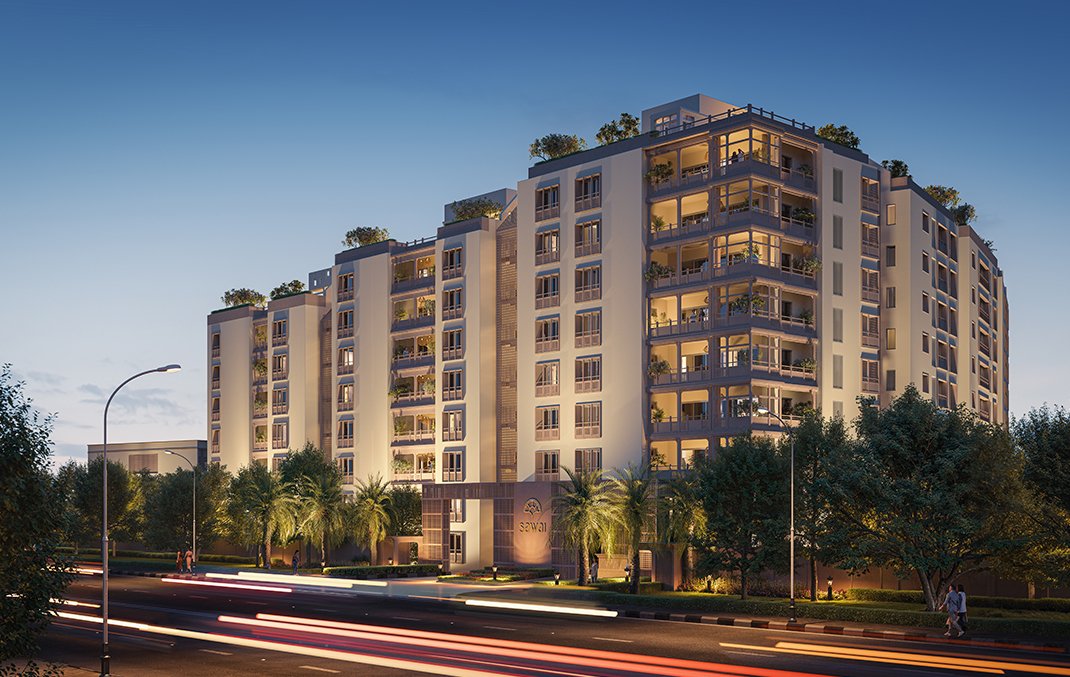
Sawai was worked out this way from the earliest floor plans, not fixed afterward. Bijoliya stone runs across the facades, Banswara marble through the interiors. Jharokhas and jali screens, drawn straight from old Jaipur, sit across the elevations doing exactly what they always did: pulling air through the rooms behind them, reworked for how people live now. The clubhouse holds more than a hundred restored antique doors and windows sourced from Jodhpur. None of it is decoration. It’s why the place feels settled the moment one steps inside, well before the reason is clear.
The question worth asking about your own home
Walk through your own space and notice where you feel expansive and where you feel closed in, where a room makes you want to sit and think and where it makes you want to leave. That reaction isn’t random, and it isn’t decor. It’s your nervous system responding to proportion, light, and outlook, the way it has for as long as humans have built shelter.
The next time a room makes you feel instantly at ease, or the opposite, trust it. Your brain worked that out long before you did