PUBLISHED ON - 05 Jan' 2026
Why Cheapest per Sq Ft Can Be the Most Expensive Choice
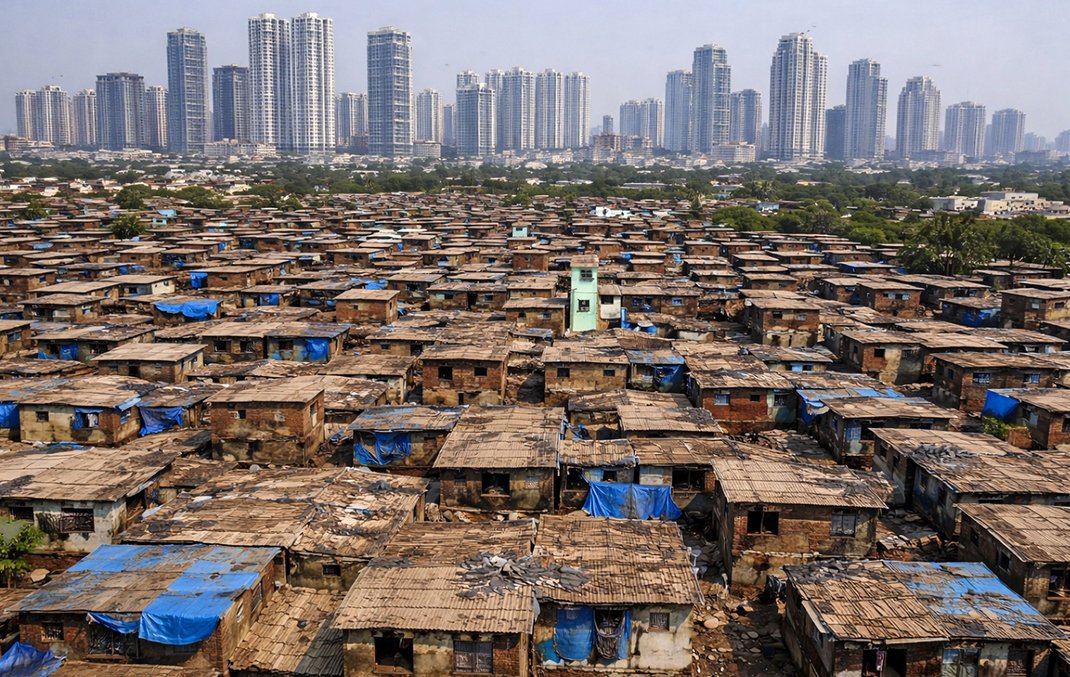
In real estate investment, price alone is a weak structural foundation. Yet many buyers still evaluate a property purely on the cheapest per sq ft metric. While this may appear economical at the planning stage, it often leads to long-term financial stress much like a building designed without structural foresight.
To invest wisely, one must understand the difference between property price vs value, just as architects distinguish between cost of construction and lifecycle performance. Akshat Apartment is a clear example of this distinction in practice where value is driven by planning, structure, and long-term usability rather than headline pricing.
The Illusion of Low Per Sq Ft Pricing
Per sq ft pricing functions like a surface-level drawing; it shows dimensions, not performance. A lower rate often reflects compromises in site context, material specifications, load planning, or construction detailing. In architectural terms, something has been value engineered too aggressively.
Akshat was never positioned as the cheapest per sq ft option. Instead, it prioritised structural clarity, efficient layouts, and material choices that perform over time factors invisible in per sq ft comparisons.
These compromises rarely appear at handover. They reveal themselves over time through premature wear, service failures, and user discomfort.
Hidden Costs Embedded in Cheap Property Investments
Many cheap property pitfalls are embedded in construction quality. Lower-priced developments often use thinner slab sections, inferior waterproofing membranes, reduced reinforcement margins, or lower-grade finishes. While these decisions reduce initial cost, they increase maintenance frequency and capital repairs.
In contrast, Akshat Kanota Estate reflects a construction-led approach where durability, waterproofing integrity, and structural margins are treated as long-term safeguards rather than cost centres.
From an operational perspective, buildings with poor daylighting, ventilation, and spatial planning tend to experience higher vacancy and lower tenant retention. This weakens rental yield and increases holding costs and key property investment risks that directly affect ROI. Projects like Akshat, with balanced layouts and livable planning, naturally mitigate these risks.
Per Sq Ft Price vs Long-Term Property Value
A critical factor investors often overlook is urban context. Properties located in well-established neighborhoods benefit from existing infrastructure, mobility networks, and social amenities. These elements function like a strong urban framework supporting appreciation over time.
Take Sawai as an example. Despite not being the cheapest per sq ft option at launch, its location, structural planning, and consistent demand have helped it retain relevance and value over time. The project benefits from a mature micro-market where infrastructure, connectivity, and livability were already in place factors that directly influence long-term property value.
Akshat Skyhomes follows this same value logic anchored in an established urban context where demand, livability, and infrastructure already exist, strengthening long-term value retention.
In contrast, cheaper properties on underdeveloped sites often lack this structural ecosystem. Even if the built form exists, demand does not mature at the same pace. This mismatch explains why per sq ft price vs long-term property value trends consistently favor better-located assets.
How Low-Cost Properties Reduce Returns on Investment
When investors account for recurring repairs, higher vacancy cycles, and slower appreciation, it becomes clear how low cost properties reduce returns on investment. Savings at acquisition are gradually offset by lifecycle costs maintenance, retrofitting, and reduced exit liquidity.
Liquidity is crucial. A well-designed, well-located building retains market relevance, making resale easier. Akshat Durlabh benefits from this advantage, maintaining buyer interest and resale liquidity over time. Cheap properties, however, often struggle to attract buyers, resulting in prolonged selling timelines or discounted exits.
Investing with Structural Thinking
Successful real estate investment requires thinking like an architect, not a bargain hunter. Strong investments are built on fundamentals: site quality, spatial efficiency, material durability, and long-term usability.
Paying a higher per sq ft price for a well-planned, structurally sound property in a strong micro-market such as Akshat Apartment is not overspending. It is investing in performance
Final Thought
In architecture, weak foundations compromise the entire structure. In real estate, chasing the cheapest per sq ft does the same to your investment.
True value lies not in how little you pay today but in how well the asset performs over time.