PUBLISHED ON - 14 Jul' 2026
Value of Open Spaces. Why What We Don’t Build Matters
In real estate, conversations often begin with what is being built: the number of residences, the height of towers, the size of homes and the range of amenities.
But perhaps one of the most important questions is the one asked less often:
What has consciously been left unbuilt?
As cities become denser and land becomes increasingly valuable, open space is no longer simply a design feature. It is becoming one of the most significant measures of thoughtful urban living.
Because sometimes, the true value of a residential development lies not only in the structures it creates, but in the space it chooses to preserve.
Open Space Is More Than Landscaping
The term “open space” is often reduced to lawns, gardens and landscaped corners. But in thoughtful residential planning, its role goes much deeper.
Open spaces influence how sunlight enters homes, how air circulates between buildings, how much privacy residents experience and how connected people feel to nature.
Well-designed residential developments with open spaces can create a greater sense of calm, improve visual openness and provide residents with opportunities to walk, pause, interact and simply step outside without leaving their community.
The value is not only aesthetic. It shapes everyday life.
As Cities Grow, Space Becomes the Real Luxury
Urban India is growing rapidly. Taller buildings and higher-density developments are inevitable parts of this transformation. Yet as cities expand, the availability of meaningful open spaces is becoming increasingly scarce.
This is changing what homebuyers value.
For many buyers exploring luxury apartments, premium residences and low-density residential projects, the space surrounding a home is becoming almost as important as the home itself.
A large apartment can still feel confined if it looks directly into another building. Conversely, thoughtfully planned distances between structures, landscaped greens and open views can dramatically transform the experience of living.
In modern cities, luxury is increasingly measured not just in square feet owned, but in the breathing room experienced every day.
What We Don’t Build Has an Impact
Every decision to leave a portion of land open is a conscious design choice.
It may mean fewer residences. It may mean greater distances between buildings. It may mean allowing landscape, courtyards and pedestrian spaces to occupy land that could otherwise have been constructed upon.
Yet these decisions create long-term value.
Open spaces allow architecture to breathe. They offer better views, greater privacy and a stronger relationship between built and natural environments. They can soften the density of urban living and make even large residential communities feel more humane.
Thoughtful development, therefore, is not always about maximising what can be built. Sometimes, it is about understanding what should not be.
The Relationship Between Open Space and Wellbeing
The connection between nature and human wellbeing is increasingly shaping conversations around residential design.
Access to greenery, natural light and outdoor spaces can encourage movement, create opportunities for social interaction and offer moments of calm within busy urban lives.
A morning walk within landscaped surroundings, children having room to play outdoors or simply seeing trees from one’s window can fundamentally change the experience of home.
This is why green residential communities and thoughtfully planned luxury developments are increasingly moving beyond ornamental landscaping towards open spaces that are genuinely usable and integrated into daily life.
Better Views. Better Privacy. Better Living.
The benefits of open space often reveal themselves in simple ways.
Homes receive more natural light. Windows open to wider views. Residences enjoy greater separation and privacy. Landscapes become part of the visual experience of living rather than an afterthought.
These qualities may be difficult to capture on a specification sheet, yet they often determine how a home feels over decades.
And unlike interiors, which can be redesigned or upgraded, the openness surrounding a building cannot easily be added later. It must be envisioned from the beginning.
A Long-Term Approach to Development
As urban land becomes more valuable, choosing not to build on every available square metre requires a longer-term perspective.
It means recognising that the quality of a residential community cannot be measured only by how much has been constructed, but also by the experience created between those structures.
This philosophy becomes particularly relevant in premium residential developments where homebuyers seek privacy, greenery and a lasting quality of life.
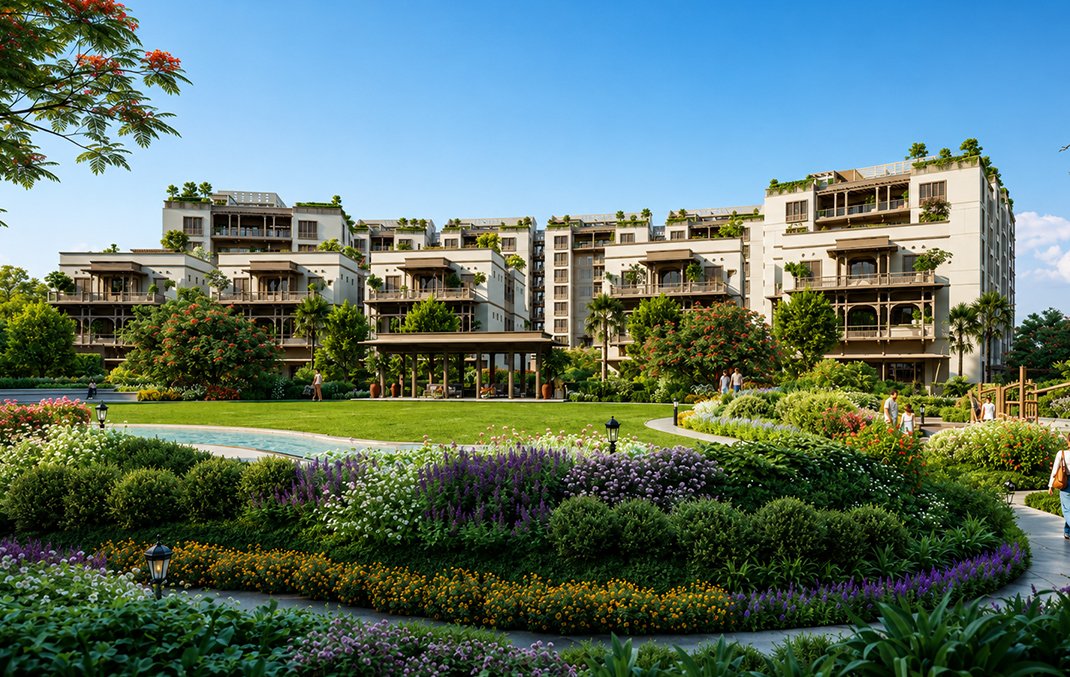
At Sawai, a luxury residential development at Statue Circle in Jaipur, approximately 73% of the project is dedicated to open spaces. It is a reflection of an approach that sees unbuilt space not as unused land, but as an essential part of the living experience.
Because ultimately, thoughtful development is not just about creating remarkable buildings.
It is also about having the vision to give them room to breathe.