PUBLISHED ON - 26 May' 2026
The Rise of Satellite Townships: Why Homebuyers Are Making the Move
When homebuyers first consider a property in a satellite town, a few familiar questions tend to surface. Will the daily commute become a burden? Are schools, hospitals, and markets as accessible as they are in the city? And on the days when you need the city quickly, will the distance work against you?
These are reasonable things to think about. A home is not just a space to live in; it is the infrastructure around an entire life. So it makes sense that buyers weigh connectivity, accessibility, and proximity carefully before looking further.
But there is another side to this calculation, one that does not get asked as often. What does living inside a dense, fast-moving city actually cost you? And is the version of convenience it offers worth what it quietly takes away?
The Real Cost of City Living
Most people calculate the cost of city living in rent or square footage. The real costs are quieter and accumulate slowly.
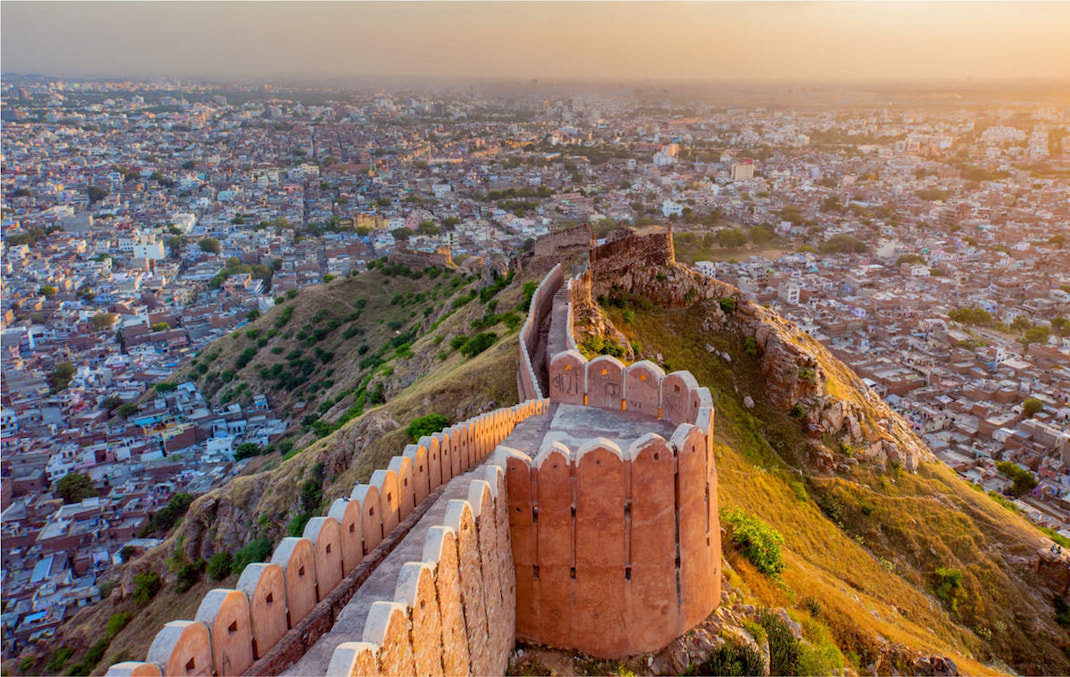
Jaipur’s central neighbourhoods are among the most densely populated in Rajasthan. More people per square kilometre means more traffic, more noise, more competition for the same roads, parks, and public spaces. At a certain point, the city stops feeling energetic and starts feeling relentless. There is a baseline of sound and pollution that most residents simply stop noticing over time: horns, construction, generators, the general hum of a place that never fully switches off. The air carries it. So do the mornings.
Satellite areas like Kanota carry a fraction of that density. Wider roads, less crowding, open land, and a neighbourhood that does not feel like it is constantly at capacity. When your surroundings have room to breathe, so do you.
What Satellite Towns Get Right
It is worth understanding what a satellite town actually is, because it is often confused with a suburb or a dormitory extension of the city. A satellite town is neither. It is a self-contained community with its own infrastructure, its own rhythm, and a job base large enough to support its residents independently. It is connected to the larger city, but it does not depend on it for everything. That distinction matters, because it means residents are not simply trading convenience for quiet. They are gaining a fully functional neighbourhood that happens to sit outside the city’s boundaries.
Kanota on Jaipur’s Agra Road corridor represents exactly this. Schools, healthcare facilities, markets, and well-maintained roads have grown organically alongside the residential population over the years. The surrounding environment of open land, cleaner air, and natural greenery gives the area a character that no amount of city-centre redevelopment can manufacture from scratch.
And the connectivity question largely answers itself. Kanota sits just about 20 minutes from Raja Park, the same time many residents of Mansarovar or Vaishali Nagar spend navigating inner-city traffic on any given morning. Distance, it turns out, is far less about kilometres and far more about what the road actually feels like.
The Intangible Advantages
Beyond infrastructure and connectivity, satellite towns build something that dense urban pockets rarely sustain over time: a genuine sense of community. When the pace slows down, people notice each other. Neighbours become familiar. Children have room to play outdoors, and families have reason to linger rather than retreat indoors. The neighbourhood becomes a place people choose to be in, not just a place they return to out of necessity.
There is also the matter of what you are not living with. No chronic noise. No air that carries the weight of a city that never stops. Mornings that begin in stillness rather than in traffic. These are not small things. They shape mood, health, and the general quality of a life in ways that only become visible over years of living.
A Different Calculation
The question was never really about distance. It was about what that distance gives you in return, and whether the trade is worth it.
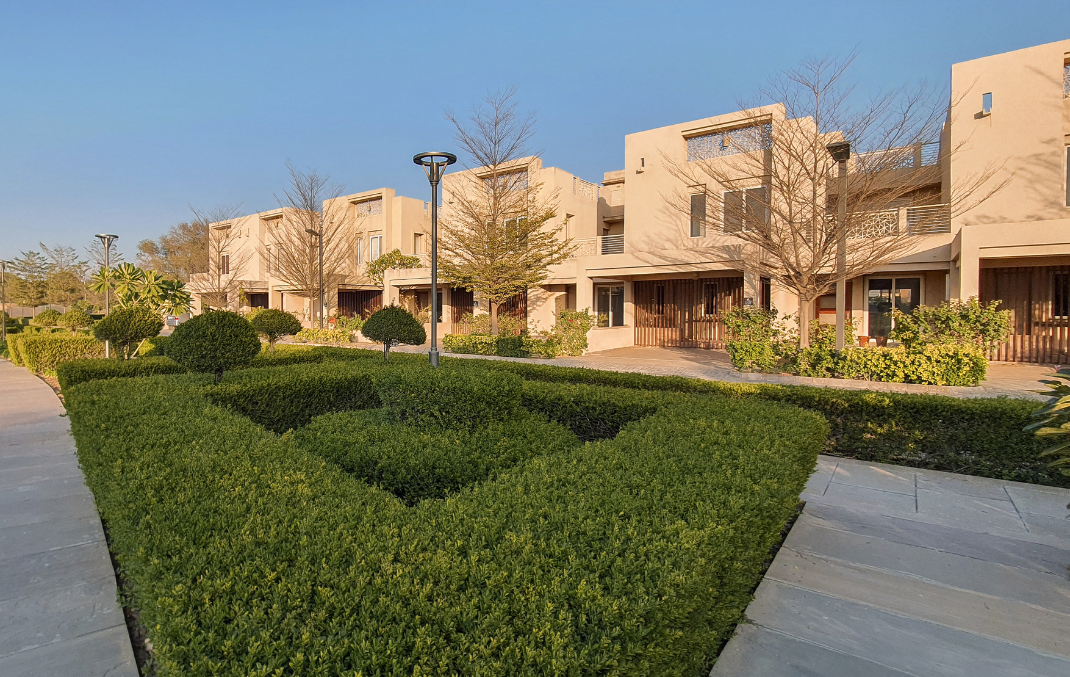
For those who have made the move to Jaipur’s satellite neighbourhoods, the answer tends to be consistent. Akshat Sky Homes within Kanota Estate was built on exactly this understanding: a township set within 35 acres of green on Agra Road, close enough to the city to stay connected, far enough from it to offer something the city cannot.
Sometimes the smartest choice is the one that takes you just far enough.