PUBLISHED ON - 25 Feb' 2026
Modern Living Is Changing, and Space Is Leading the Shift
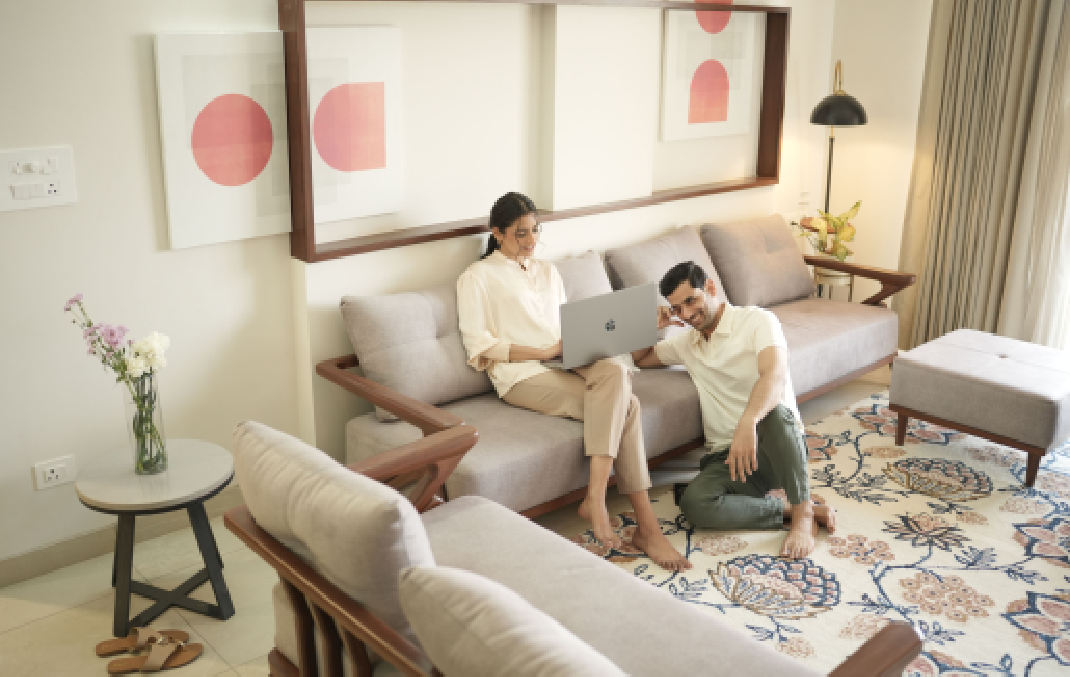
Urban real estate is entering a quieter, more thoughtful phase. For two decades, growth meant building higher and packing more into smaller land parcels. Today, premium buyers are moving in the opposite direction. They are no longer asking how tall a building is. They are asking how much space surrounds it.
This is not a passing design preference. It is a deeper shift in how value is judged. Space that is measurable, protected, and intentionally planned is becoming the new definition of quality.
A Quiet Market Shift: From Density to Breathing Room
Across Indian cities, buyers with long-term thinking are changing priorities. Privacy, natural light, and usable open green spaces are no longer indulgences. They are safeguards against overcrowded futures. Low density living in Jaipur reflects this change clearly. When planning reduces pressure on infrastructure, it protects liveability and supports long term property value. The conversation is gradually moving from unit size alone to land-to-resident ratio.
Jaipur is a strong example of this evolution. The city has expanded while still respecting spatial character. Akshat Apartments have shaped this conversation over the decades. Earlier projects, Akshat Anugrah and Akshat Durlabh, already favoured ventilation, proportion, and measured scale over aggressive density. Their newer premium residential projects in Jaipur extend that philosophy with greater clarity.
Why Space Has Become a Financial Decision
For serious investors, land efficiency is not abstract. A home built around low density planning ages better. It retains social appeal, rental strength, and emotional value. In high end real estate investment in Jaipur, scarcity is often planned, not accidental. Fewer residences sharing more land creates long term stability.
Buyers are increasingly investing in environments, not just units.
Sawai: Low Density Planning at a Landmark Address
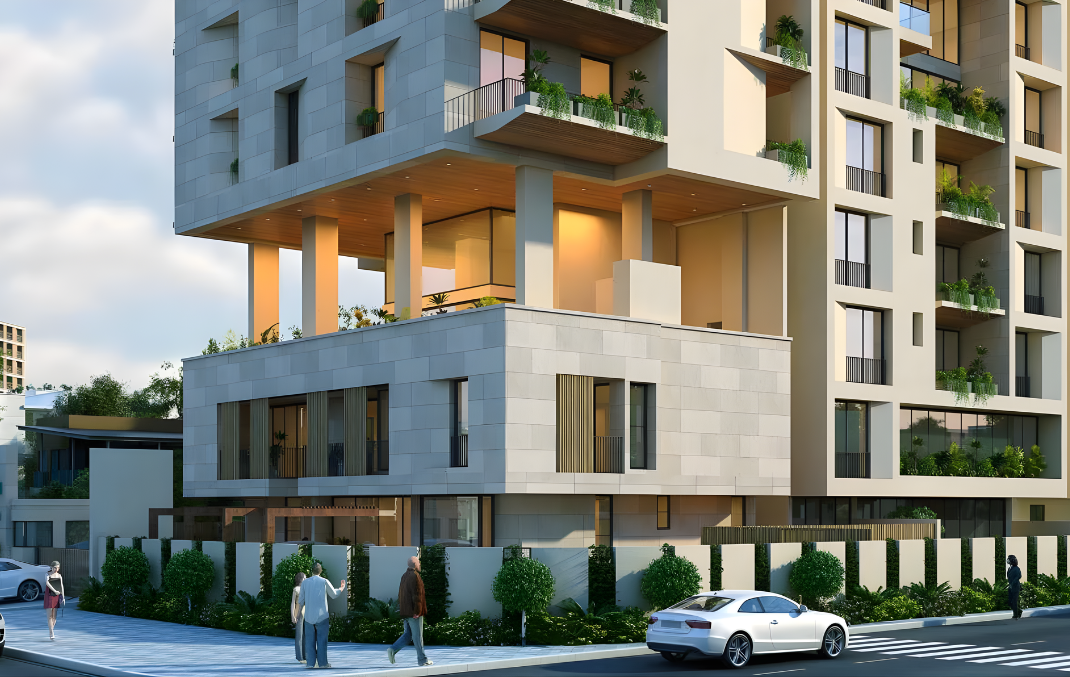
Sawai demonstrates how central city luxury apartments in Jaipur can prioritise land allocation before building mass. Spread across five acres, with approximately 73 per cent dedicated to open areas, the project reflects a planning philosophy where construction follows landscape, not the other way around. At its centre sits over one acre of landscaped gardens functioning as active green infrastructure for residents.
With 91 residences and five independent bungalows near Statue Circle luxury homes, the land-to-resident ratio remains intentionally low. This controlled density creates privacy focused housing projects, calmer internal movement, and long term spatial exclusivity.
Akshat Sky Homes: Township Scale Openness
Akshat Sky Homes represents apartments in low density township located inside the 35-acre Kanota Estate, Jaipur. The design allows towers to sit within large open green spaces that Jaipur communities actually use daily.
Large format residences ranging from roughly 2,000 to 3,400 sq ft reinforce the planning intent. The scale ensures that amenities, walking areas, and community zones never feel compressed, even as the township grows.
What This Signals for Long Term Investors
Low density housing is not only about comfort. It is about durability. Cities will continue to densify, but spacious homes in Jaipur that resist overcrowding become long term reference addresses.
The modern buyer is not chasing spectacle. They are securing space, silence, and proportion. In mature markets, those are the assets that hold value quietly and consistently.