PUBLISHED ON - 24 Apr' 2026
What “Luxury Apartments” in India Mean And What They Should Be
India’s residential market faces a clarity gap. The word luxury follows you everywhere, from hoardings to brochures. It appears across a wide spectrum of housing, from mid-segment urban apartments in Tier-2 cities to high-rise developments with hundreds of units. It has been stretched so far that it no longer means anything.
For buyers evaluating luxury apartments in India, this creates a gap. So here is a clear framework of what luxury delivers in India and what it should deliver.
“Luxury” Has Become India’s Most Overused Real Estate Word
Walk through the marketing of any new residential launch in Mumbai, Bengaluru, Hyderabad, Jaipur and the vocabulary is identical. World-class amenities. Premium gated community. LUXURY lifestyle.
What it typically means when used in reality is a pool shared by 100 families, a clubhouse that impressed on the site visit, and a gym you pay separately to use. These are not luxury features, they are standard amenities packaged in luxury language.
The Density Problem No One Talks About
High-density living is the most consequential and least discussed variable in premium real estate.
Six to eight apartments per floor, twenty floors per tower, three towers per project. This results in hundreds of families sharing access points, vertical circulation, and open areas. The gated boundary remains visible, but the sense of privacy reduces significantly.
Globally, luxury housing is measured through land to home ratio. When the number of homes per acre reduces, the quality of living changes in a measurable way. Circulation becomes quieter. Open space gains presence. Privacy becomes real rather than promised.
Material as a Marker of Intent
Imported marble flooring is the oldest distraction in premium construction, high-gloss, immediately persuasive, and deliberately designed to draw attention away from what is inside the walls.
Full-height glass façades, for example, create a contemporary look but require careful climatic response in cities with extreme temperatures. In many cases, they increase heat gain and energy dependence.
These choices prioritise visual appeal, while performance depends on how the building responds to its environment.
In a climate like Jaipur, where temperatures regularly exceed 44°C, material response becomes critical. Locally sourced stone such as Bijoliya sandstone is valued for its durability and thermal performance, making it well-suited to the region’s conditions.
The pattern remains consistent. The language suggests luxury. The outcome depends on how deeply the design responds to context, scale, and use.
What Defines Genuine Luxury
When viewed closely, genuine luxury follows a more consistent set of principles. It is defined less by additions and more by decisions. Low density and private living, material integrated for climate response, balanced open space, architecture rooted in regional patterns, like the essence of a Rajasthani home lies in its courtyard.
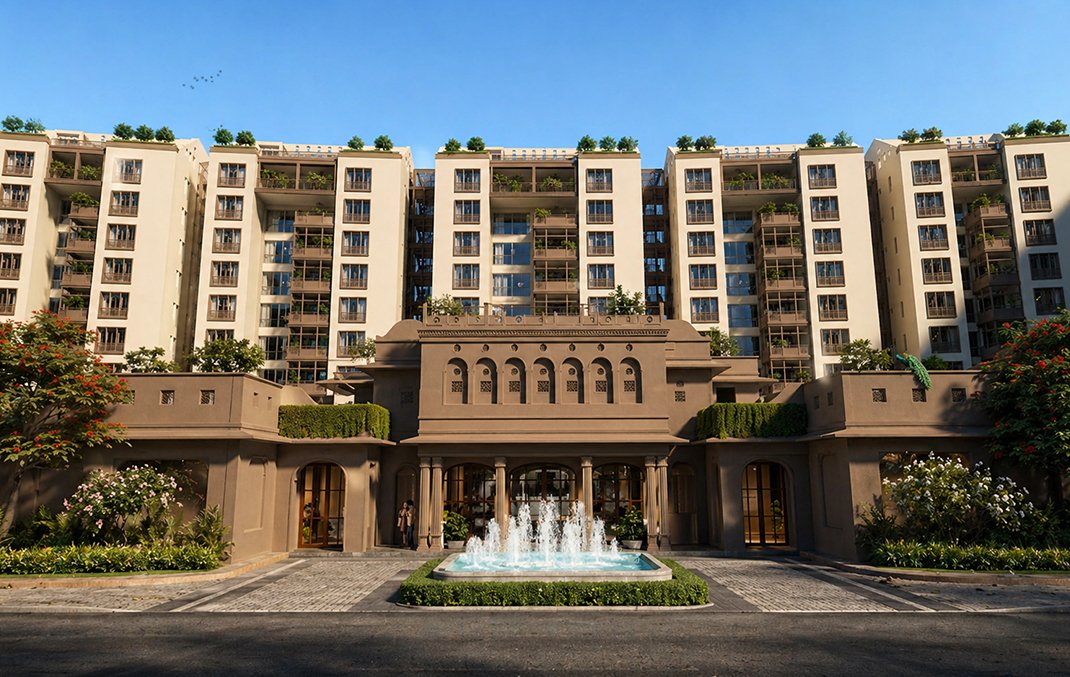
At Statue Circle, Sawai by Akshat presents this approach. Five acres accommodate ninety one residences and five private bungalows, resulting in approximately 3.5 homes per acre. This directly influences privacy and circulation. With only 27 percent construction and 73 percent open space, this creates an oasis of calm and elegance.
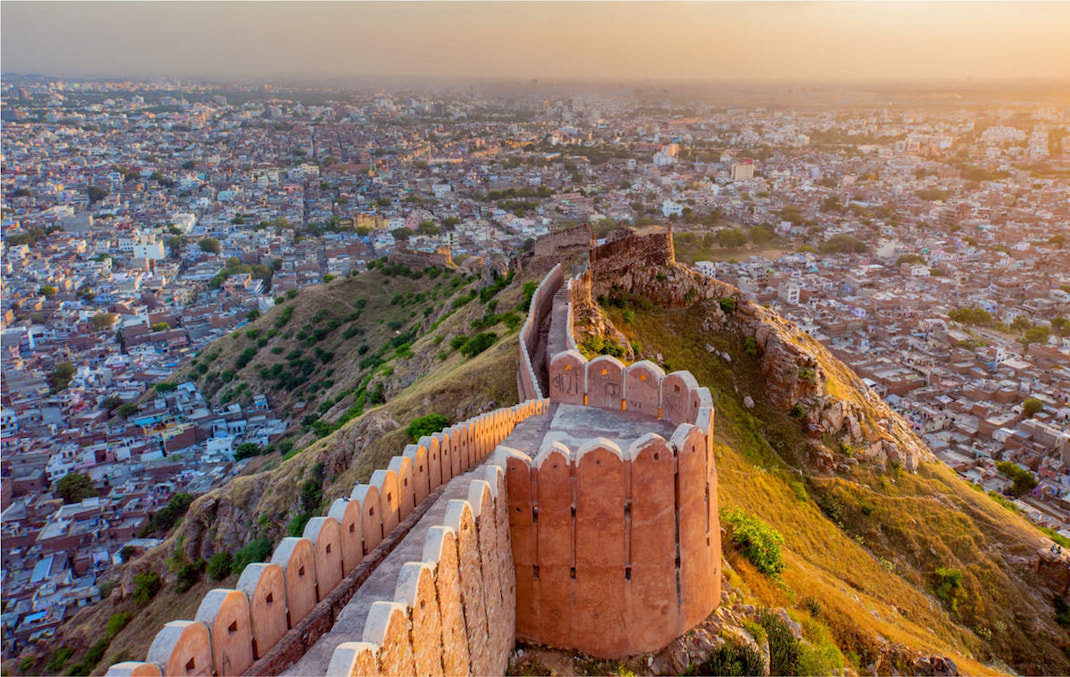
Located at Statue Circle in Jaipur is the kind of address which is central, established, adjacent to Central Park, with direct views of the Aravalli hills.
Sawai was designed with the logic of regal living. Bijoliya stone facades, shaped by local artisans, form the primary façade material. It offers durability, thermal performance, and a visual connection to the city’s architectural language. Interiors use Banswara marble, aligning with local sourcing and long-term performance. Craftsmanship plays a visible role. Hand-cut stonework, arches, and jaali elements reflect a more detailed approach to construction.
Clubhouse built around over 100 individually restored antique doors from Jodhpur. Not reproductions, actual objects with history, integrated into 32,000 square feet of communal space designed around stillness rather than spectacle. This idea evolves into a clubhouse designed as a modern haveli.
Taken together, these factors align with the principles that define genuine luxury. They demonstrate how planning, material, and context shape the outcome.
Conclusion
Luxury reveals itself in decisions that cannot be scaled or replicated easily. Fewer homes on larger land, materials that respond to Jaipur’s climate, and architecture that draws from its context create a fundamentally different way of living.
Akshat knows how these principles come together in practice. The difference is not in what is added, but in what is prioritised. Space over density, craft over finish, and intent over presentation.
This is where luxury moves from a label to a lived experience.