PUBLISHED ON - 10 Feb' 2026
Will Jaipur Become the Next Urban Extension of Delhi NCR? A Real Estate Perspective
Urban regions in India do not expand through notifications or boundary changes alone. They expand when infrastructure, employment, and residential demand align over time. Delhi NCR itself followed this path, with cities such as Gurugram and Noida evolving gradually from peripheral markets into fully integrated urban centres.
A Market Moving Beyond Its Traditional Identity
For decades, Jaipur’s real estate market was driven by local housing demand, government employment, tourism, and low-density residential development. That foundation remains intact, but the market has matured. Over the last ten years, Jaipur has seen consistent upgrades in road infrastructure, the emergence of planned residential corridors, and a clear shift in buyer preference toward quality-led developments.
This evolution matters because markets begin to change character long before they change scale. Investors tracking NCR’s early growth phases will recognise these patterns.
From plotted developments within Kanota Estate to thoughtfully planned vertical housing such as Akshat Durlabh and Akshat Mystique Roop Gulab, the focus has remained on restraint, layout efficiency, and long-term livability.
Connectivity Is Redefining Distance
Connectivity has always been the first real trigger of urban integration. NCR expanded once intercity travel became predictable and time-bound rather than distance-bound.
Jaipur’s improving highway and expressway connectivity toward Agra and onward NCR routes has started to change how the city is perceived. Located along Agra Road within Kanota Estate, Akshat Sky Homes sits within this evolving network, placing it in practical reach of Agra, Ajmer, and the wider industrial belts of North India through established and emerging corridors.
The project’s location also allows access to multiple economic zones rather than a single direction. Connectivity toward Bhiwadi-Neemrana, logistics clusters along NH-48, and key Rajasthan growth centres such as Kota and Udaipur supports employment mobility across sectors. This broader regional integration positions Akshat Sky Homes within a multi-corridor framework, where residential relevance is shaped by connectivity across several cities and industrial regions.
Positioned at an approximate 180 minutes travel window from Gurugram, Akshat Sky Homes remains embedded within Jaipur’s planned residential structure while benefiting from improving intercity movement. This relationship between location, connectivity, and livability defines the project’s role within the current regional landscape, without relying on assumptions about future outcomes
Infrastructure Maturity Is Closing the Gap
The Jaipur-NCR comparison today is not about matching scale, but about infrastructure maturity. Ring road planning, corridor-led development, improving utilities in newer zones, and the growth of logistics and warehousing along highways suggest a city preparing for sustained growth with greater foresight.
This environment has also allowed vertical housing to emerge selectively. Projects such as Akshat Durlabh and Mystique reflect how vertical development in Jaipur is evolving, not as density driven construction, but as carefully planned residences where infrastructure capacity, privacy, and structural longevity are prioritised.
Unlike older NCR pockets that expanded rapidly under pressure, Jaipur is scaling more deliberately. For end users, this means better planning. For investors, it reduces the risk associated with infrastructure catch-up.
Residential Preferences Are Signalling Confidence
Another indicator of Jaipur’s evolution is the changing residential mindset. Buyers are increasingly prioritising privacy, lower density, thoughtful layouts, and homes that are designed to age well rather than follow short-term trends.
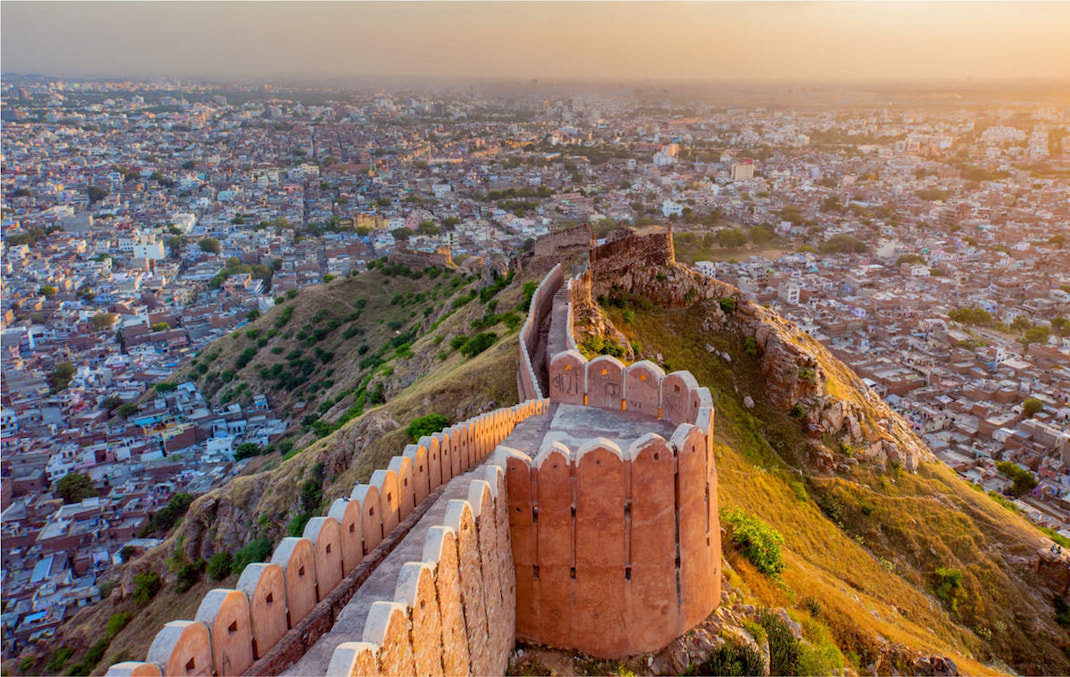
This shift is visible in Jaipur’s evolving skyline. Vertical development is emerging only where connectivity and infrastructure can genuinely support it, signalling a more deliberate and confident phase of growth. Within this landscape, Akshat Sawai represents a defining moment.
Sawai expresses premium living with restraint, clarity, and a global design sensibility that feels grounded rather than imposed. Its presence has quietly placed Jaipur on a broader architectural and residential map, attracting attention from buyers who look beyond local benchmarks. Strong connectivity further strengthens this relevance, allowing the project to sit comfortably within both the city’s fabric and the wider regional network. In this way, Sawai has emerged as a new embodiment of Jaipur’s skyline, composed, outward-facing, and assured.
Inspired by Jaipur’s regal heritage and located at a prominent address, Sawai is conceived not merely as housing but as a considered addition to the city’s architectural fabric. It reflects an approach that values proportion, context, and longevity over spectacle. This philosophy aligns closely with Jaipur’s broader shift toward infrastructure-led, thoughtful growth, where development is guided by long-term relevance rather than transient momentum. In this sense, Akshat’s theme points to a future that is measured and meaningful, rooted in legacy while engaging confidently with evolving urban aspirations.
What This Means Long Term
Jaipur is unlikely to become Delhi NCR in an administrative sense. What it is becoming is structurally comparable in the ways that matter most: connectivity, infrastructure maturity, and residential quality.
At Akshat Apartments, this period is viewed not as an opportunity for aggressive expansion, but as a moment for measured, reputation-led growth. A long-standing presence in Jaipur brings a responsibility to build with continuity and foresight, an approach that historically supports long-term value for both residents and investors.